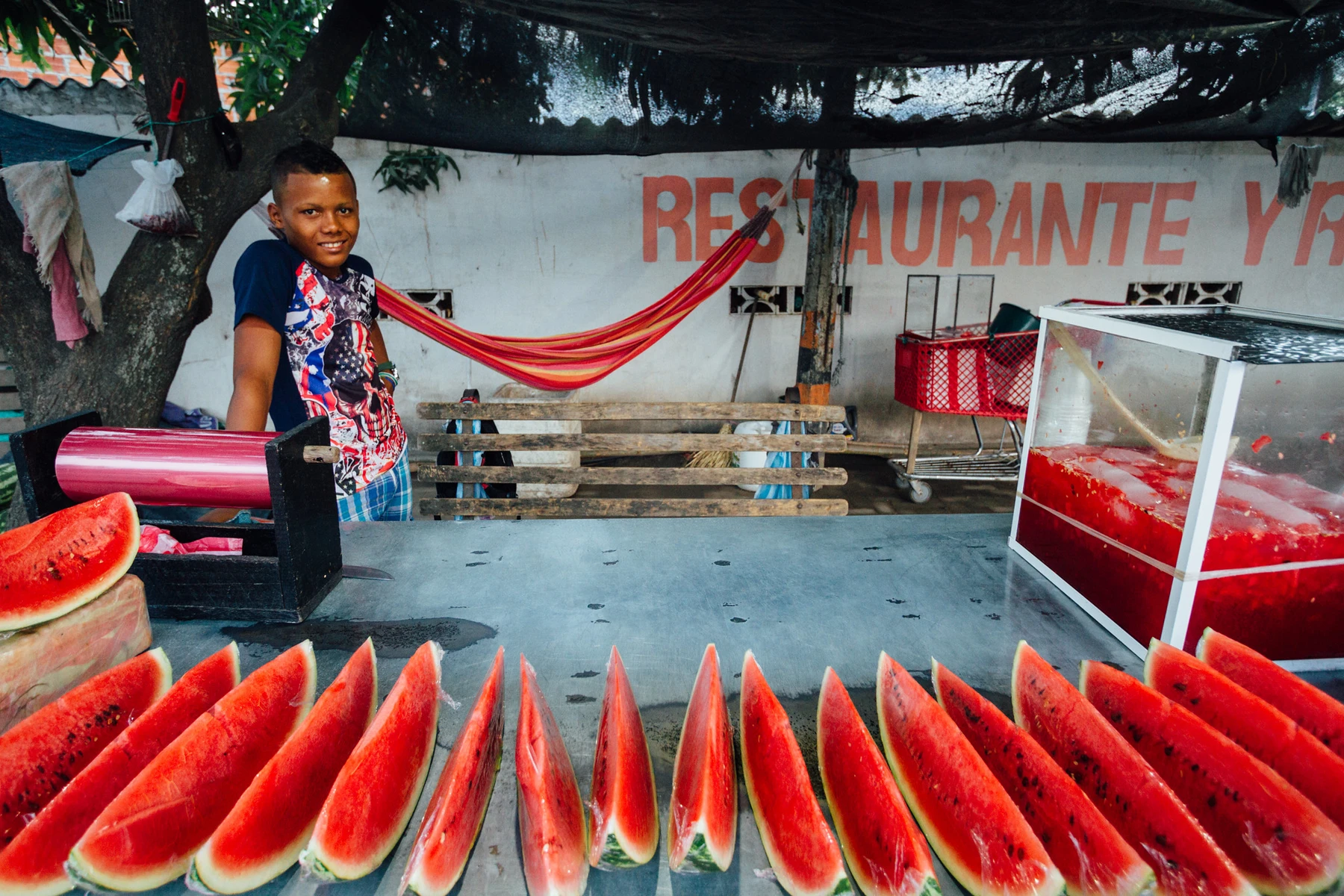
Food Frontiers and Security, a Consultative Group on International Agricultural Research (CGIAR) science program, focuses on urban and peri-urban food systems, fragile and conflict-affected food systems, and island food systems, with the goal of improving resilience to shocks, sustainability, food security, and nutrition. Within this program, the International Food Policy Research Institute (IFPRI) is supporting an area of work on urban food systems.

The Urban Food Environments and Diets (UFED) tool targets users who are interested in understanding and addressing diet- and food environment-related nutrition challenges including those involved in intervention implementation – such as NGOs, policymakers and members of local and national governments – and researchers, and may be weighing the relative costs and benefits of using various assessment tools, unsure if which is the appropriate fit.
UFED aims to assist users in making practical decisions on how to select from the large catalog of assessment methods, indicators and tools. In this way, it is user demand-driven and aims to synthesize information on existing assessment methods and provide recommendations dependent on user needs. It does not intend to validate or rank specific tools.
The decision tree tool is designed to allow users to select their entry point (diet or nutrition problem or query) and be guided through a series of questions that will lead to suggested toolkit packages.
Acknowledgements
UFED is made possible with support of the CGIAR Trust Fund (http://www.cgiar.org/funders).
Project Lead: Deanna Olney
Team Members: Amy Margolies, Quinn Marshall
Collaborators: Tony Murray, Susanna Pecora, Mourad Moursi
We are grateful to Marie Ruel, Loty Diop, Elodie Becquey, Jef Leroy, Gabriela Fretes, Kalyani Raghunathan and Shauna Downs for their thoughtful feedback on technical content. Special thanks to Jamed Falik for his invaluable assistance in conceptualizing the decision tree tool and with graphic layout. We also appreciate Indira Yerramareddy for her communications support, and Nilam Prasai and Yunchul Jung for their IT assistance.
The UFED toolkits link diet and food environment assessment methods, tools, and indicators to provide an integrated approach for studying urban and peri-urban areas. These kits provide recommendations on:
- combinations of methods, tools, and indicators to use, depending on what questions you want to answer;
- high and low-resource options that take into account time and money limitations;
- adaptations or considerations for assessment and measurement specific to urban and peri urban contexts and
- examples of research questions or studies that use these tools and approaches.